All About Moisture Analyzers

mark3-2012
Image: Sartorius

A moisture analyzer is a great tool for any plastic processor to have. It will tell you for sure that you are drying the material adequately. It is also a great tool for material suppliers to have so that they can aid customers who are trying to troubleshoot problems.

How exactly a moisture analyzer works seems like a bit of witchcraft. You put a bit of material in, you choose some type of program and hit the start button. Ten to twenty minutes later, the readout shows a percentage. The process is a little bit more complex than just heating the material and burning off the moisture weighing the sample before and after. You don’t need a moisture analyzer to do that, you can do that with a lab dryer and lab balance. How does it work?

Continue reading “All About Moisture Analyzers”

Get Your Pressure Right

Hydraulic Pressure vs Plastic Pressure

When we refer to injection pressure, we can be talking about one of two things. We can be talking about hydraulic pressure which refers to the pressure that the hydraulic ram is exerting on the screw or we can be talking about plastic pressure which is the pressure that the screw puts on the melted plastic.

These two are not the same thing and if you specify an injection pressure range on your processing guides, you should only specify hydraulic pressure and you should be very clear about it.

Continue reading “Get Your Pressure Right”

James May: “Car makers charge a hefty premium for it, but it’s nothing more than a by-product of cheeseburgers. Maybe it’s time for us to move on.”

corniche-interior
Image: The Times UK

A few weeks ago, I posted a story suggesting that automakers, especially higher end automakers, should start offering vegan interior options (you can read it here). It seems that James May formerly of Top Gear fame and now on The Grand Tour on Amazon agrees.

He has some real issues with an older vehicle with leather interior. You can read the article in The Times UK here.

My old BMW and it’s Painted Plastic Parts

used-car-lot

It had been many years since I had driven a car that was older than 3 years. Being in plastic material sales and in management positions for a number of years, I had company cars that were leased. Basically from 1990 until 2010 I leased 8 different cars on 2 to 3 year leases. Turn and burn, one after another.

In 2010, I was self employed and my finances had taken a hit from starting a company in September of 2008, right before the bottom fell out of the economy. The lease from my 2007 Infinity G35 was coming to an end. I thought about buying the Infiniti instead of turning it in, it had been an excellent car. However I decided to buy a car that I had desired for a while, a BMW 335i. I started hunting for a used one online and finally came across  a three year old example that was the exact car that I wanted at a dealer in San Francisco.

I planned, at the time, to keep the car for 3 to 4 years and then I would trade it in something else. Sometimes life gets in the way of our plans. I still have the car, now almost ten years old. It has been interesting driving a rather complex German car so far out of warranty. I wanted to talk about how it has held up.

Continue reading “My old BMW and it’s Painted Plastic Parts”

What PEX Tubing and the Microwave Oven have in Common

old-microwave

I have a friend that is in the pipe and pipe fitting business. He distributes copper and steel pipe and fittings for commercial and residential applications. He is convinced that PEX tubing is going to give everyone cancer and advises everyone not to use it. He also thinks that microwave ovens will give you cancer and won’t go near one, much less eat anything that was cooked in one.

If he knew how PEX was made, he’d be even more freaked out.

Continue reading “What PEX Tubing and the Microwave Oven have in Common”

ASA: The Lesser Known Cousin of ABS

vance-and-coy-2

How exactly did the word cousin become synonymous with similarity? How many times have you heard someone refer to one thing being the close cousin to another thing like granite is a close cousin of marble or a planet in a distant solar system being Earth’s cousin? I don’t know about you but I am not that much like any of my cousins. Maybe it’s just me.

Anyway, you could say that ASA is a close cousin to ABS. ASA is ABS with one ingredient changed out.

Continue reading “ASA: The Lesser Known Cousin of ABS”

The Dream of Polycarbonate Car Windows is Still Just a Dream (updated)

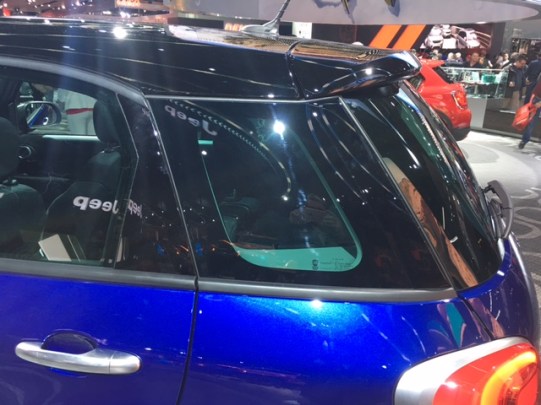
fiat-500l-window-1
The Fiat 500L polycarbonate rear quarter window

Originally posted on 4/25/2016.

In 1997, GE Plastics and Bayer AG announced that they were forming a joint venture with an initial investment of 40 million dollars to develop and market polycarbonate materials that could be used to replace glass for automotive side windows. 15 years later in 2012 the Fiat 500L became the first car to use polycarbonate side window glazing. Sounds like the beginning of a great new market for polycarbonate. Unfortunately the only windows on the Fiat 500L that are made from polycarbonate are the tiny rear corner windows at the back of the vehicle. To make matters worse, the Fiat 500L remains the only car that has used polycarbonate side window glazing. What happened?

Continue reading “The Dream of Polycarbonate Car Windows is Still Just a Dream (updated)”

Nylon -vs- Polyester

vintage-women-boxing-photos-6

Boxing in heals?

Although nylon 6/6 is much more commonly used than polyester (PBT) for injection molding applications, you might be surprised that these materials are relatively similar in properties.

There are, however, a few differences that might make one or the other better for a particular application.

Continue reading “Nylon -vs- Polyester”