Just How Dangerous is BPA?

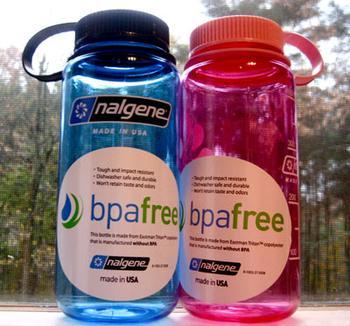
bpa-free2_medium

Almost everyone by now has at least some familiarity with BPA in plastic, especially if you have kids. For those of you that are not familiar, here is the media narrative on BPA. BPA is an additive that is used in plastic materials. This additive causes horrible health problems but the evil chemical industry won’t remove it and the FDA must be being bought off by the same evil chemical industry to continue to allow its use. In fact the whole obesity epidemic might be the fault of BPA and thus the evil chemical industry.

Don’t believe that that is the narrative? Check out this Newsweek article.

Now, let’s talk about the reality of BPA.

Continue reading “Just How Dangerous is BPA?”

Izod Impact: ISO vs ASTM

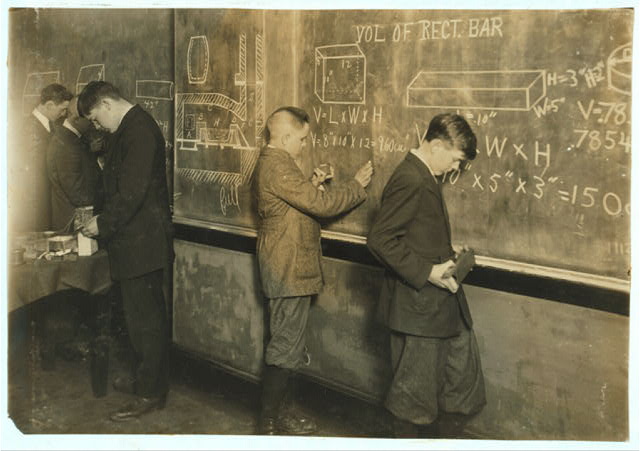
math-class-1916
Sorry for all of the math in this post

If you are unaware, there are two sets of test methods that are currently in use for many of the common tests that we see reported on data sheets and certificates of analysis. This has caused a lot of confusion.

To add to the confusion, I have seen many data sheets and certificates of analysis in which data is reported incorrectly. None more than izod impact. There is currently an ASTM method and an ISO method for testing izod impact. Although some data sheets claim that they are, the two test methods used for izod impact are definitely not equivalent. They are two different test methods and there is no way of converting between the two.

Continue reading “Izod Impact: ISO vs ASTM”

Some Observations From The Last 28 Years In The Plastics Industry

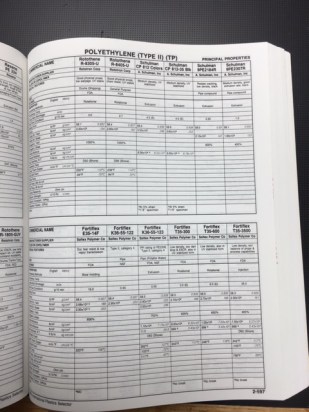
Plastics Selector Inside
I spent many hours looking through these books.

As I mentioned in a recent post, after a number of years of searching, I finally found a copy of the Plastics Materials Digest – International Plastics Selector. Before the internet, when I needed to find a material or look up properties, this is how I did it.

The books contain thousands of property data sheets as well an index that allows you to look up materials by trade name and even physical properties.These books were very good. If you needed a polypropylene with tensile strength over 3600 psi, you could find it in the index and then it would refer you to the page where you could find the full data sheet.

The copy that I found happened to be from 1988, the same year that I started in the industry.

I have had a little time to look through the book now and I have a few observations.

Continue reading “Some Observations From The Last 28 Years In The Plastics Industry”

A Little Piece of Plastics Industry History

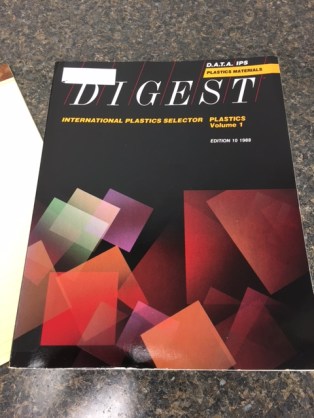
Plastics Selector Cover

Back in the pre-internet days, this is the book that we all used to look up materials and find property data sheets. The Plastics Materials Digest: International Plastics Selector.

I have been looking for one of these old books on Ebay for a couple of years now and I finally came across this near perfect copy dated 1988 which happens to be my first year in the industry.

Continue reading “A Little Piece of Plastics Industry History”

All About Polyethylene

PE Pipe

Polyethylene was first discovered by accident in a laboratory in 1898. This is a running theme throughout the history of the plastics industry. It was not until 35 years later that the first commercially viable polyethylene was synthesized in 1933 by Imperial Chemical Industries (ICI). The long gap between the initial discovery of a polymer and the commercialization is also a recurring theme in the history of the plastics industry.

Polyethylene is the most commonly used plastic globally. According to Wikipedia, annual production is around 80 million metric tons or 176 billion pounds. It is used in many applications such as film that is used for everything from moisture barrier to grocery bags. It is also used for things like pick-up truck bed liners and tanks of all kinds. In recent years, polyethylene has been used for increasingly demanding applications like automotive fuel tanks, potable water pipe, artificial hip joints and even fiber for bulletproof vests.

Polyethylene’s use in these increasingly demanding applications has been made possible by innovations from the material manufacturers. Unlike TPO, these innovations have not happened at compounders but during the reaction of the polymer. These innovations have brought a dizzying array of new polyethylene materials to the market. A quick look at Matweb shows that there are currently 5534 different grades of polyethylene. I want to break down some of the different types that are now available.

Continue reading “All About Polyethylene”

Acetal Copolymer -vs- Homopolymer

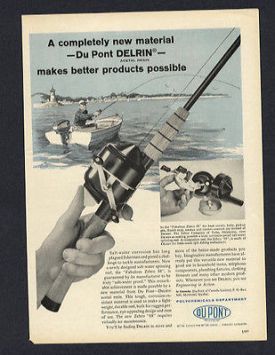
Delrin Ad

*Updated with additional information on 8/30/2016

Acetal, also known as poyoxymethylene (POM), is a very commonly used thermoplastic material that we are all familiar with. Everyone in the industry has a story of the time when someone ran some acetal at too high a temperature and had it degrade filling the plant with formaldehyde. However, not everyone is aware that there are actually two different versions of acetal on the market, copolymers and homopolymers.

I see a lot more copolymer being used than homopolymer at injection molders which puzzles me. This might be because the homopolymers tend to come at a premium price. Sometimes, however, you get what you pay for. A brief history of acetal might explain why homopolymer is more expensive and also why you should consider using it

Continue reading “Acetal Copolymer -vs- Homopolymer”

Relative Temperature Index is the Best Measure of Heat Resistance

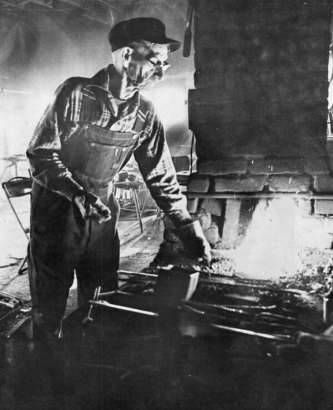
Blacksmith 2

In specifying materials for certain applications, we might need to know what kind of heat resistance that the material has. This is a vague concept at best. What do we mean by heat resistance? Can the heat resistance of a material be altered with additives or fillers?

Let’s delve into a few of these issues and I will show you where to find the best indication of heat resistance of plastic materials as well as give you some guidelines that you can use for picking materials.

Continue reading “Relative Temperature Index is the Best Measure of Heat Resistance”

When Plastics Need Memory


Hard Drive
5 MB of memory in 1956

When we speak of memory in plastic materials, we are talking about a plastic parts ability to return to its original shape after it is deformed in some way. More specifically, we are talking about a part being able to return to its original shape after being held in a flexed position for an extended period of time.

The question is, what makes a material have good memory and what materials are best used for applications that require this property?

Continue reading “When Plastics Need Memory”

Understanding Nylon and Moisture

49750_107420275

Nylon is one of the oldest and most commonly used thermoplastics but there still seems to be a lot of confusion about properly drying nylon and in general about how nylon is affected by moisture. Moisture in the raw material causes many processing issues and part failures and the affects that moisture has on molded parts seems to confound people as well. I hope in this article to clear some of this up.

Continue reading “Understanding Nylon and Moisture”